FCAS: Three billion swallowed up for a plane that never flew
Nine years, €3.2 billion spent, zero flying prototypes: the FCAS is the industrial fiasco that the State knew was inevitable—and funded anyway.
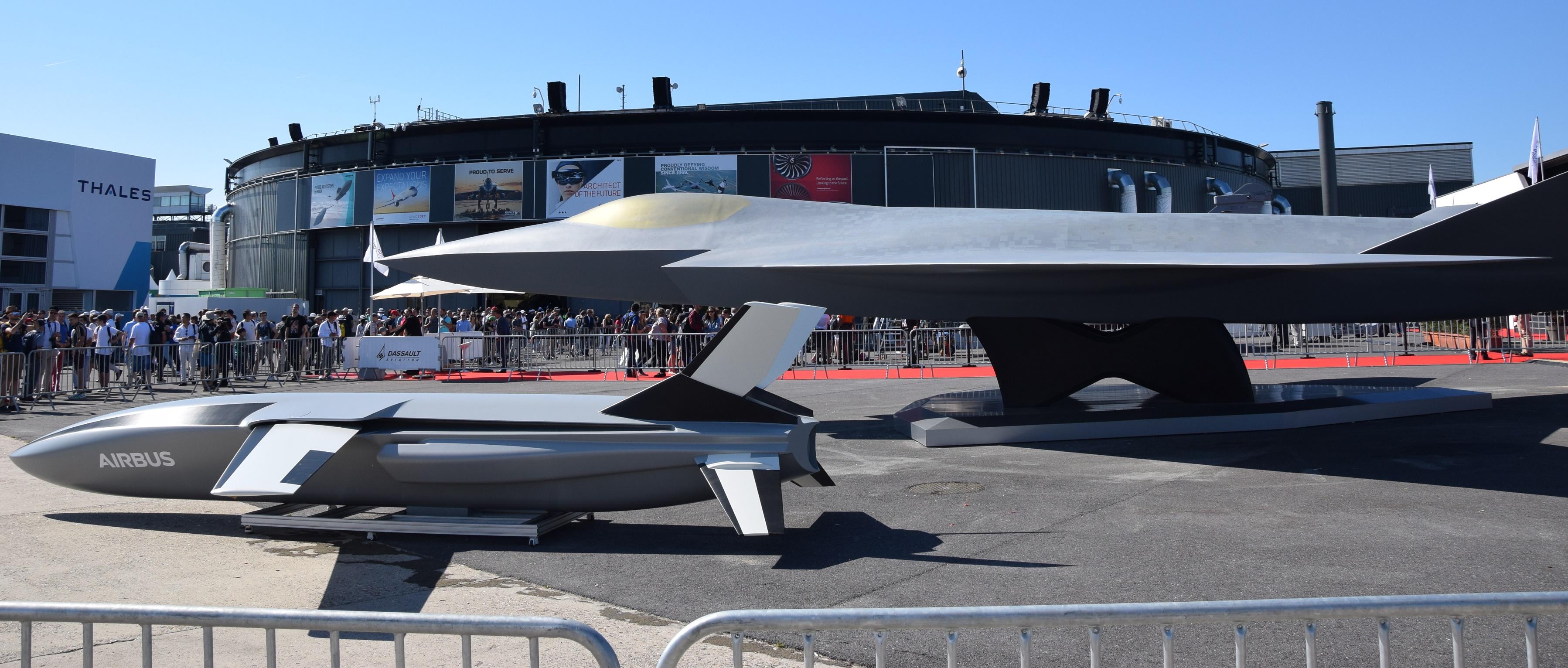
Launched in 2017 to embody European defense, the future Franco-German (and Spanish) fighter jet made a final off-track excursion on June 8, 2026. Truckloads of public money financed studies, meetings and promises.
No planes on the runway. The Future Combat Air System (FCAS) was supposed to replace the French Rafale and the German Eurofighter by 2040. It will ultimately go down in history as a paper airplane, paid for at a high price by taxpayers.
Three figures sum up the fiasco: nearly €100 billion in total expected costs over the program's duration, €3.2 billion committed to phase 1B of the demonstrator, and no flying prototype after nine years of discussions. It's hard to imagine a worse outcome.
Launched by Emmanuel Macron and Angela Merkel, and joined two years later by Spain, the FCAS was intended to combine a new generation fighter jet, drones, connected sensors, artificial intelligence and a "combat cloud".
On paper, an industrial revolution. In reality, an endless dispute over industrial distribution between Dassault, Airbus, and Indra, the Spanish industrial partner in the project. Years of negotiations, mediations, and political arbitration ended in a complete and utter crash.
FCAS: a bill already committed, no prototype in flight
On June 8, Paris and Berlin finally activated the ejection seat.
But the emergency landing does not erase the lost years, nor the bill already committed. In December 2022, the Directorate General of Armaments announced the contract for phase 1B, amounting to 3.2 billion euros, intended to prepare the demonstrators, that is to say the experimental prototypes tasked with taking the future aircraft from concept to the first real tests, over a period of about three and a half years.
This theoretically represented over one billion euros per partner state. Added to this sum are the costs of previous studies, the teams mobilized, administrative expenses, and funding granted to industry.
In 2023, La Tribune reported that France was expected to invest €1.6 billion in the FACS program, taking into account the joint contract and additional national investments. A lot of public money poured into the altar of European defense, for no aircraft delivered.
The French Court of Auditors had, however, raised several red flags. In a 2018 report on European cooperation in armaments, it recalled that poorly managed cooperation is in itself a source of additional costs [1] and that, among the major European programs, none had then fully met its military objectives or its timetable.
The French Parliament had relayed these warnings: as early as 2020, a Senate mission estimated the development of the program at between 50 and 80 billion euros [2] – five to eight times the development cost of the Rafale – and pointed out its industrial risks; in 2021, the senators described the FCAS as an “ambitious” project but one “concentrating numerous risks” that must be “fully controlled”.
These warnings did not prevent the state from proceeding. Taxpayers therefore funded a program whose risks were known, while others moved forward.
FCAS: Meanwhile, Germany is buying American and preparing a new fighter jet
Germany's double game is enough to make people grind their teeth: while the FCAS was getting bogged down, Berlin was securing its aeronautical future with Lockheed Martin.
As early as 2022, Germany announced the purchase of thirty-five American F-35s for nearly 10 billion euros , with the possibility of ordering more.
Europe wanted to build its future fighter jet. What it has mainly proven is its ability to transform a strategic ambition into a public bill without an aircraft at the end of the runway.
The disagreement had been brewing for years: Dassault, the prime contractor for the aircraft, refused a governance structure in which Airbus – representing Germany and Spain – controlled two-thirds of the program , a division which it considered incompatible with effective management.
The crash, however, did not deter anyone in Germany. The very next day, on June 9, a consortium led by Airbus, with MBDA and six German groups (Hensoldt, Diehl, MTU Aero Engines, Liebherr, Autoflug, Rohde & Schwarz) but without Dassault, submitted a project for a sixth-generation fighter jet, "Team Gen 6", to Berlin.
Berlin is no longer hiding it: its Defense Minister, Boris Pistorius , declared on June 9, according to BFMTV, that "Germany is looking for new partners to build a new generation fighter jet".
Originally published in Contribuables Associés [3].