An alternative to the state: three key ideas from The Libertarian Manifesto by Murray Rothbard
What if the ills of our society all stemmed from a single source that we regard as indispensable: the state?
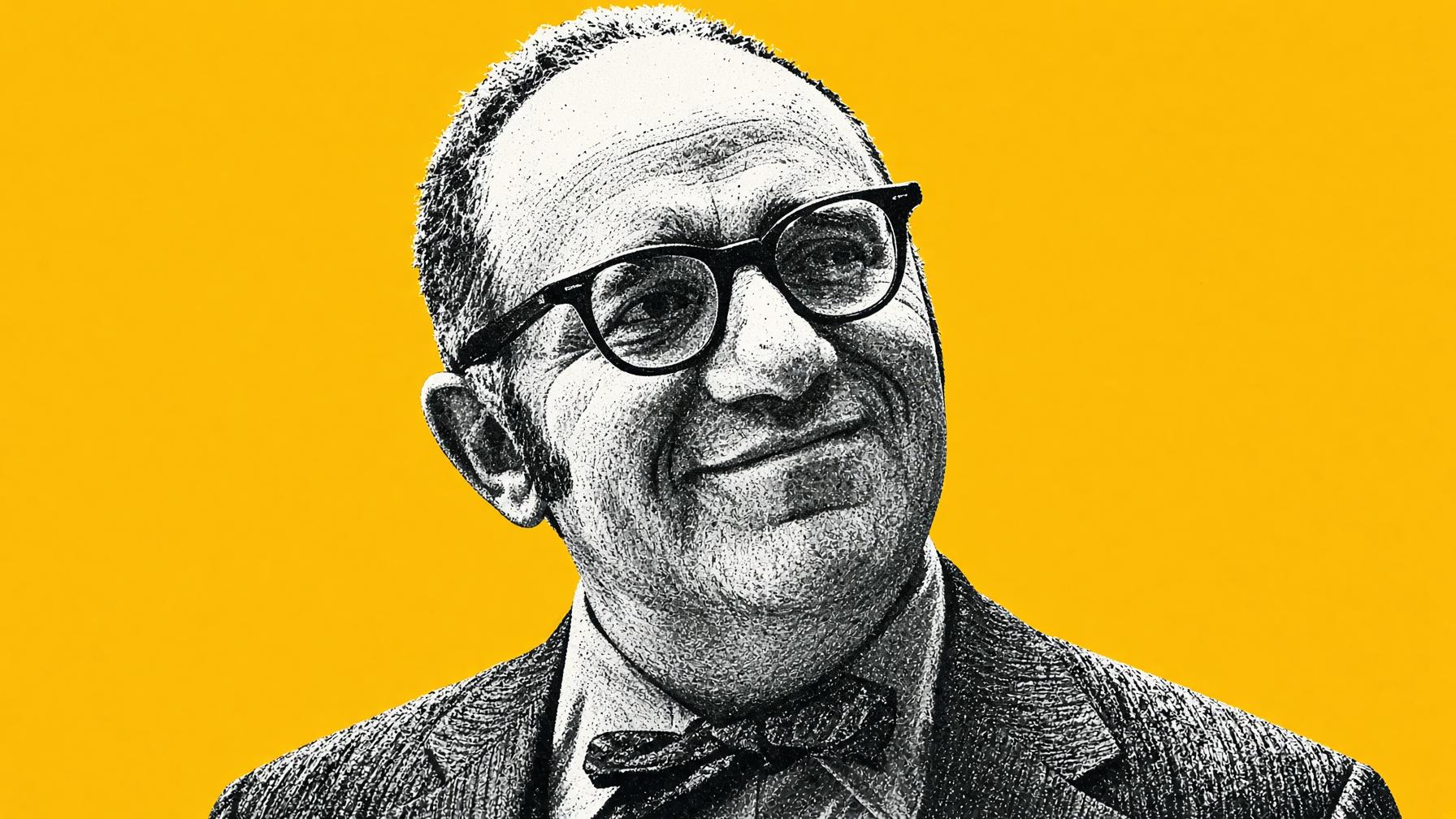
In 1973, the American economist, historian and philosopher Murray Rothbard made waves with his seminal work, For a New Liberty: The Libertarian Manifesto.
Among the many introductions to libertarian philosophy available, this is arguably the finest and most iconoclastic. A passionate writer with an unwavering commitment to logical rigour, Rothbard demonstrates the full extent of his many talents in this work: he is simultaneously an economist, historian, political philosopher and moralist.
He begins by setting out the principles of a completely free society, which he calls the ‘libertarian creed’. Here, libertarianism should be understood as a set of rational ethical principles underpinning politics. Libertarianism is not about economics, but about what is right and wrong in social life: it is a political philosophy.
Starting from this moral creed, he then proposes practical solutions to today's major social problems: education, war, freedom of expression, pollution, crime, taxation and more.
The moral foundation: freedom rests on rational principles
To build a coherent political philosophy, Murray Rothbard does not begin with complex economic equations, but with a fundamental ethical question: who owns your body?
According to Rothbard, there are only three logical possibilities:
- Every individual owns themselves (the principle of self-ownership).
- One class of individuals owns everyone else (a system of slavery or caste).
- Everyone owns an equal share of everyone else (‘participatory communism’).
Rothbard quickly demonstrates that the second option violates the moral equality of human beings, while the third is a physically impracticable absurdity that inevitably develops into a repressive oligarchy. Only self-ownership is morally and practically viable.
Self-ownership therefore means that each individual is the sole legitimate owner of their body, mind and the fruits of their labour. It is a right that everyone possesses naturally, simply by virtue of being human. To develop this argument, Rothbard draws on John Locke (1632–1704), the English philosopher and forerunner of the Anglo-American Enlightenment.
If everyone owns themselves, no one may dispose of another person's person or property without their consent. The non-aggression principle therefore follows immediately and logically from self-ownership. Any initiation of physical force against another person's person or property is thus illegitimate. How should aggression be defined? Rothbard's answer is that it constitutes interference with another person's property without their consent.
He also emphasises that ‘human rights’, understood as individual rights, and ‘property rights’ are inseparable. Freedom of expression is little more than an empty promise if the state holds a monopoly over printing presses, newsprint and conference venues! To exercise a human right, individuals must have access to private material resources.
Although Rothbard respects the emancipatory intentions behind the 1948 Universal Declaration of Human Rights, he strongly criticises it for conflating genuine rights with pseudo-rights. In his view, the articles concerning ‘economic and social rights’ violate genuine rights because they require coercion against producers to finance the benefits they promise.
The key point here is that, according to Rothbard, a coherent defence of freedom requires uncompromising moral principles grounded in natural law rather than fluctuating and uncertain utilitarian or consequentialist calculations. As he writes:
‘There are numerous problems with limiting ourselves to a utilitarian ethic. For one thing, utilitarianism assumes that we can evaluate alternatives and decide on policies according to their good or bad consequences. But if it is legitimate to apply value judgements to the consequences of X, why is it not equally legitimate to apply such judgements to X itself? Could there not be something inherent in an act itself, in its very nature, that makes it good or bad?’
Implicitly, Rothbard is criticising Mises's utilitarian ethics, even though Mises remains his master in economics, arguing that they provide an insufficient foundation for a coherent libertarianism.
The state is an aggressor masquerading as a protector
The second key idea concerns the coercive nature of the state. Coercive, in this context, means aggressive. As we have seen, aggression always involves interference with another person's property and therefore violates the moral foundations of freedom.
Rothbard's great originality lies in his refusal to grant the state any form of moral exemption. Whereas most political philosophies apply one ethical standard to ordinary citizens and another to politicians, the libertarian applies the same universal moral code to everyone.
The state, however, is an institution that acquires its revenue through physical coercion, known as ‘taxation’, and claims a monopoly, enforced through coercion, over the provision of defence services (police and courts) within a given territory.
Drawing in particular on Lysander Spooner, a nineteenth-century American anarchist theorist, Rothbard argues that every state commits acts that would be universally condemned as criminal if carried out by an individual or a private gang.
Thus, he argues, taxation is legalised theft, conscription is slavery, war is mass murder, and monetary policy is monopolised counterfeiting.
According to Rothbard, the myth of the social contract conceals the true origins of the state. The state operates according to the logic of racketeering: it creates threats (foreign wars and domestic enemies) and then sells its own protection to the populations it subjects.
Demystifying the state: ‘a gang of bandits on a grand scale’
Rothbard then puts forward a fascinating idea: the notion of the state as a bandit. The state has always been ‘a gang of bandits on a grand scale’. If a critical mass of citizens became aware of this reality, the state would collapse very quickly, reduced to nothing more than an exposed criminal organisation.
How, then, does a small group of rulers manage to impose its will on an entire society? Rothbard quotes the philosopher David Hume, who had already made this observation more than two centuries earlier: every government rests on the support of the majority. This support need not involve active enthusiasm. Passive submission is enough. The state survives because most people accept paying their taxes, obeying the laws and submitting to decrees without actively resisting.
Propaganda and ideological mystification are therefore essential to the state's survival, including in democracies. Rothbard writes:
‘Whereas the existence of any government, from absolute monarchy to military dictatorship, rests on the consent of the majority of public opinion, a democratic government must manufacture and shape that consent on a daily basis.’
Since the masses are not equipped to develop abstract theories, they adopt the ideas disseminated by intellectuals. The state has therefore forged a historical alliance with them, based on an exchange of services. Intellectuals develop rationalisations to convince the public that the state is wise, benevolent, altruistic or scientifically indispensable, and that its absence would lead to chaos.
In exchange for this ideological legitimisation, the state incorporates intellectuals into the ruling class, offering them status, prestige, financial security and positions as planners within the bureaucracy. Rothbard writes:
‘Whereas this function was once performed by the priestly caste and the alliance of Throne and Altar, it is now fulfilled by technocrats, economists and scientific experts.’
Rothbard subsequently examines the many mechanisms of mystification employed by the state and its intellectuals. However, to avoid making an already lengthy introduction any longer, I shall leave readers to explore the relevant chapter themselves.
The libertarian alternative: privatising public services, including core state functions
How can the free market and voluntary contracts replace the state in providing core public services such as policing, justice and roads?
A free society is one in which there is no legal possibility of coercive aggression against an individual's person or property. In other words, it is a society without a state.
Faced with this radical criticism of the state, the immediate reaction is often: ‘But who will build the roads? Who will protect citizens from crime if the state disappears?’
Rothbard devotes a large part of his Manifesto to demonstrating that all the services currently monopolised by the state can be provided more efficiently, economically and ethically by the free market. Security, justice, roads and education would all benefit from being organised through voluntary contracts and the free market.
Today, the state manages roads bureaucratically, creating chronic traffic congestion by setting artificially low prices during peak hours. Private owners would introduce demand-responsive pricing, ease congestion and maintain road safety to maximise the value of their assets.
Private protection companies would be funded through competition. Unlike state police forces, which enjoy guaranteed revenue from taxation regardless of their courtesy or efficiency, a private security agency would lose its customers at the slightest abuse or sign of incompetence.
Private arbitration already exists in international commerce. In a libertarian society, private judges and arbitration courts would apply a legal code based on non-aggression and restitution to victims.
According to Rothbard, the libertarian strategy requires an unwavering commitment to the complete abolition of state coercion, without opportunistic compromises.
Unlike reformists who advocate small budget cuts of 2%, Rothbard adopts a firmly abolitionist position, inspired by the nineteenth-century abolitionists who fought against slavery. This does not mean resorting to violence, but rather fighting through the strength and courage of ideas, in a radical intellectual revolution.
Rothbard often posed the following question: ‘If there were a magic button on this lectern which, when pressed, would instantly abolish the state and all its constraints, would you press it?’ The genuine libertarian answers without hesitation: yes, immediately!
For Rothbard, although freedom is often achieved incrementally in practice, libertarians must never theorise or legitimise gradualism, lest they lose sight of their ultimate goal.
Conclusion: practical questions that remain unanswered
Ultimately, The Libertarian Manifesto provided libertarianism with a monumental ethical foundation, but it also raises practical and empirical questions. Who protects the weak against powerful property owners? Is there not a risk of de facto monopolies, with the wealthiest property owner establishing their own police force? How can contracts be enforced if no one has ultimate authority?
For example, a robust libertarian theory must explain what incentive structures would compel the most powerful actors to respect the non-aggression principle over the long term. In other words, for a libertarian order to endure, mechanisms must exist that make violations of rights costly, even for the most powerful.
These are the kinds of questions to which Rothbard's disciple and intellectual heir, Hans-Hermann Hoppe, devoted his books during the 1990s and 2000s. Readers may also turn to the brilliant analysis offered by the two authors of The Sovereign Individual (1997), which brings together politics and technology. This book has recently been translated into French, but that is another subject, to which we shall return in future articles.
- A few years later, in 1982, he developed the ideas of the Manifesto in a more in-depth book, The Ethics of Liberty, published in French by Les Belles Lettres in 2011. ↩
- John Locke, Two Treatises of Government, 1690. ↩
- Murray Rothbard, For a New Liberty, Part 1, Chapter 2. ↩
- Lysander Spooner, No Treason, 1870. French translation published by the Institut Coppet. ↩
- For a New Liberty, ‘The Libertarian Heritage: The American Revolution and Classical Liberalism’. ↩
- Murray Rothbard, For a New Liberty, Part 1, Chapter 3, on the state and the intellectuals. ↩
- Rothbard credits the nineteenth-century Franco-Belgian economist Gustave de Molinari as the intellectual originator of this individualist anarchist view, applied to justice and defence. ↩
- Murray Rothbard, ‘Why Be Libertarian?’, Left and Right: A Journal of Libertarian Thought, vol. 2, no. 3, 1966, pp. 5–10; reprinted as Chapter 15 of Egalitarianism as a Revolt Against Nature. French translation available online. ↩
- The Sovereign Individual, by James Dale Davidson and William Rees-Mogg, was translated and published in French by Konsensus in 2026 as L’Individu souverain: Survivre et prospérer face à l’effondrement de l’État-providence. ↩


Share to: