Christine Lagarde’s early departure under intense political scrutiny
Christine Lagarde will leave the ECB on 7 February 2027, nine months before the scheduled end of her term.
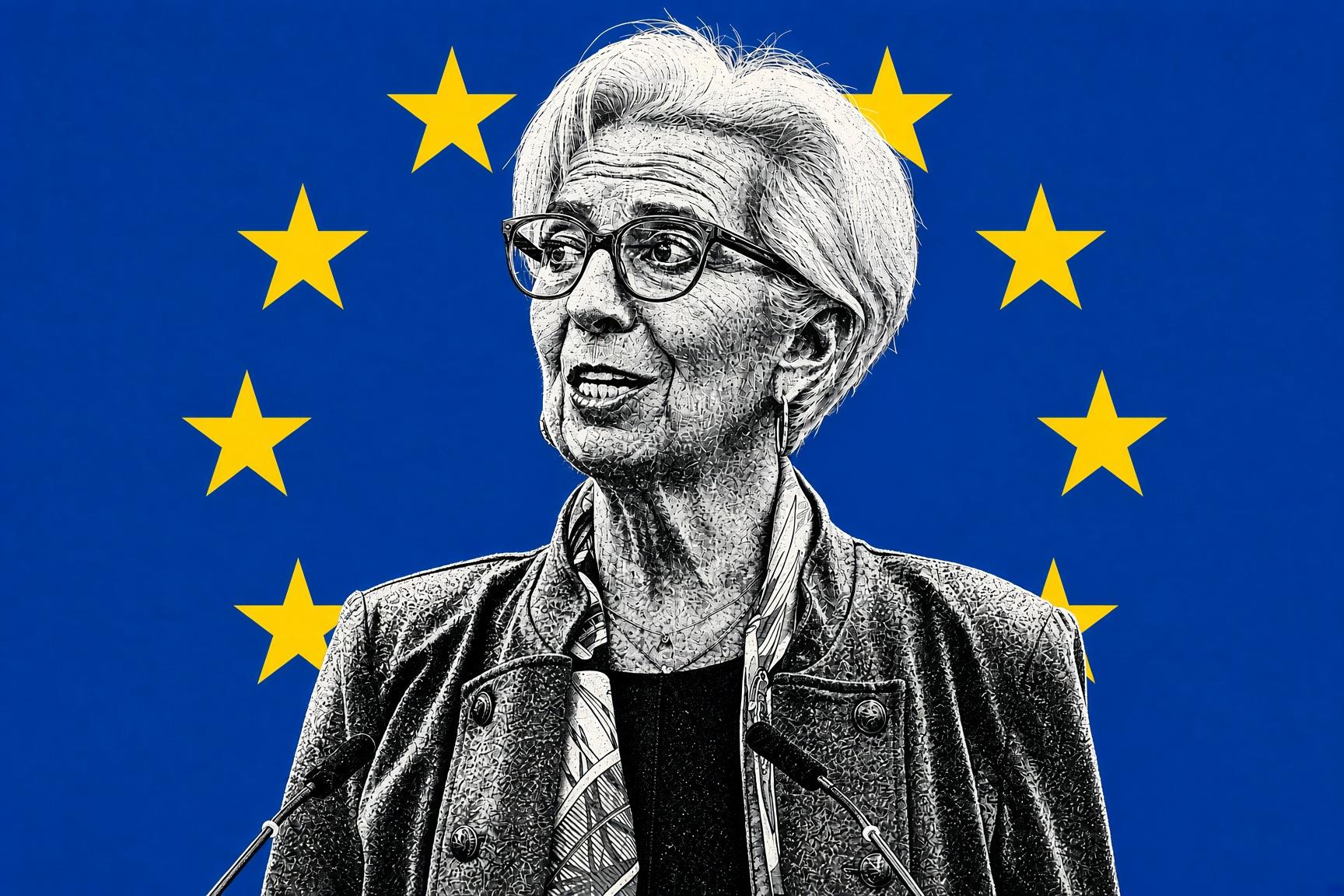
On 29 October 2026, Christine Lagarde officially announced that she would step down as President of the European Central Bank (ECB) on 7 February 2027, almost nine months before her term was due to expire on 31 October 2027. At the age of 70, the former Managing Director of the International Monetary Fund (IMF) is thus bringing to an end a presidency that began in November 2019 and was marked by several economic crises and a transformation of European monetary policy instruments.
Her early departure primarily changes the timetable for appointing her successor. Under normal circumstances, her replacement would have been appointed after the French presidential election in spring 2027. The process is now under way before the election, allowing Emmanuel Macron to take part in the European negotiations.
Under Article 283 of the Treaty on the Functioning of the European Union, the European Council will appoint her successor by qualified majority, following a recommendation from the Council of the European Union and after consulting the European Parliament and the ECB’s Governing Council. The process was initiated by António Costa, President of the European Council.
Two names have consistently emerged as leading contenders: Dutchman Klaas Knot, former Governor of the Dutch central bank, and Spaniard Pablo Hernández de Cos, General Manager of the Bank for International Settlements.
Lagarde has said that she wants to regain her freedom to speak out on issues beyond monetary policy and intends to play an active role in the French political debate. Her departure also gives current European leaders the opportunity to choose her successor before a possible change of government in France. Several observers have put forward this second motivation, although Lagarde herself has not officially confirmed it.
Her monetary policy record is mixed. In response to the scale of the Covid-19 crisis, the ECB launched the €1.85 trillion Pandemic Emergency Purchase Programme (PEPP). In July 2022, it also introduced the Transmission Protection Instrument (TPI), designed to counter unwarranted increases in sovereign bond yields. The instrument therefore came after the pandemic crisis, although it extended the broader approach of protecting monetary policy transmission. It supplemented the Outright Monetary Transactions (OMT) programme, adopted in 2012 to help manage crises such as the Greek debt crisis.
Like the US Federal Reserve (Fed), the ECB was slow to respond to inflation, only beginning to raise interest rates in July 2022. However, it began cutting rates as early as June 2024, ahead of the Fed, which did not begin cutting until September. At the same time, it continued quantitative tightening, gradually reducing its balance sheet and putting upward pressure on long-term interest rates.
One of Lagarde’s major stated ambitions when she took office was to incorporate climate risks into monetary policy instruments. The 2024–2025 climate plan reflects progress in this direction, although implementation remains partial. She made greater progress, however, on retail and wholesale digital euro projects, particularly tokenised interbank settlement. The latter initiative involved 64 participants and more than 50 experiments.
Finally, the French debt crisis represents another challenge. Despite tensions in the bond market, the ECB has not activated the TPI. On 29 October, it kept its deposit facility rate at 2.50% and continued to reduce its balance sheet. This stance highlights the distinction between a crisis of confidence specific to French public finances and monetary fragmentation that would justify European intervention.
By the same author


Similar topics


Share to:
By the same author
Similar topics