Belgium threatens to nationalise the nuclear plants Engie wants to sell
Brussels is drafting laws to seize Doel and Tihange if talks with Engie fail. In Europe, nuclear power is increasingly state-owned.
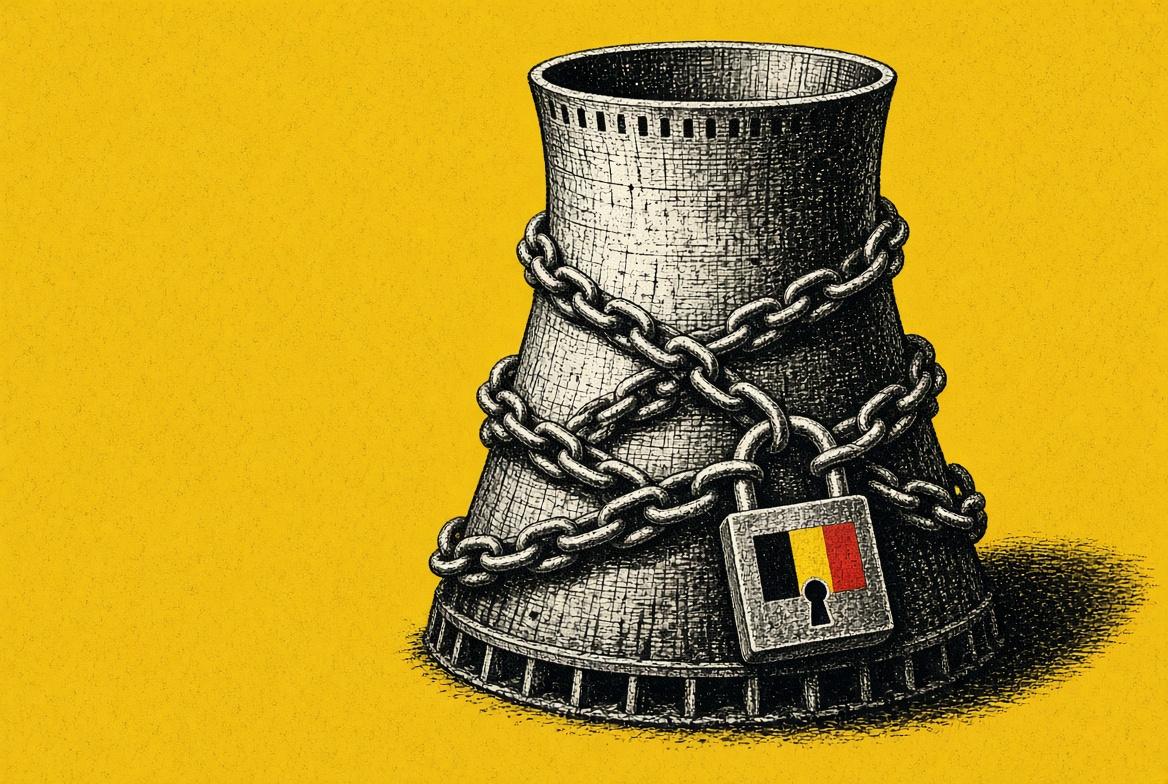
Late October, Belgium's prime minister, Bart De Wever, has ordered draft laws that would allow the state to nationalise by force the country's nuclear power plants if talks with Engie, the French group that owns them, break down. In that case, the state alone would set the compensation paid to Engie. The company could challenge it in court, but the government would meanwhile press ahead with extending the plants' lives.
Engie wants to leave nuclear power to focus on renewables and networks, and has been in exclusive talks with the government since April 29th to sell its nuclear business. The sticking point is who will pay for decommissioning, which is expected to cost €11bn-12bn. Engie has set aside only €8.7bn. The two sides also disagree over Tractebel, Engie's engineering arm: the company wants to sell all of it, while the government wants only its nuclear division. The deadline for a deal has already been pushed back twice and now runs until December 12th. Without a deal, Engie threatens to resume dismantling the reactors that have already been shut down, which would make restarting them impossible.
It was the Belgian state itself that decided in 2003 to phase out nuclear power. The law was repealed only on May 16th 2025. In 2023 the previous government agreed with Engie to extend just two reactors, Doel 4 and Tihange 3, until 2035.
The phase-out has left its mark. Of Belgium's seven reactors, only Doel 4 and Tihange 3 are still running. Three were shut in 2025 alone. Nuclear power's share of Belgian electricity fell from about 60% at the turn of the century to 34% in 2025, and the country imported more electricity than it exported for the third year in a row.
The state is already a co-owner. Under the deal that extended Doel 4 and Tihange 3, closed in March 2025, the Belgian state and Engie each own half of the two reactors, and the state took on responsibility for future nuclear waste. The government now wants to run the two reactors until 2045 and to build new ones.
Elsewhere in Europe, nuclear power is already mostly in state hands. In France, the state took full ownership of EDF in June 2023. In the Czech Republic, the state holds about 70% of ČEZ, which owns the Dukovany and Temelín plants, and the government wants to buy the rest. In Sweden, most reactors belong to Vattenfall, which is owned by the state. The other owners are Uniper, majority-owned by the German state, and Fortum, majority-owned by the Finnish state. Spain is an exception: the Almaraz plant, for example, belongs to the listed companies Iberdrola (52.7%), Endesa (36%) and Naturgy (11.3%).
In America, which has the world's largest nuclear fleet with 94 reactors, most plants are owned by private companies such as Constellation. There are public exceptions, such as the Tennessee Valley Authority, a federal corporation, and Nebraska's public power district.
When an American reactor closes, it is often private capital that brings it back. Constellation shut unit 1 at Three Mile Island in 2019 for economic reasons. In 2024 it signed a 20-year contract to sell all of the reactor's output to Microsoft's data centres, and it now aims to restart it by the end of 2027, at a cost of about $1.6bn.
By the same author


Share to: