Estonia embraces robot pharmacies as Germany maintains its ban
The Estonian government supports machines that dispense prescription medicines around the clock, with a pharmacist available by video call.
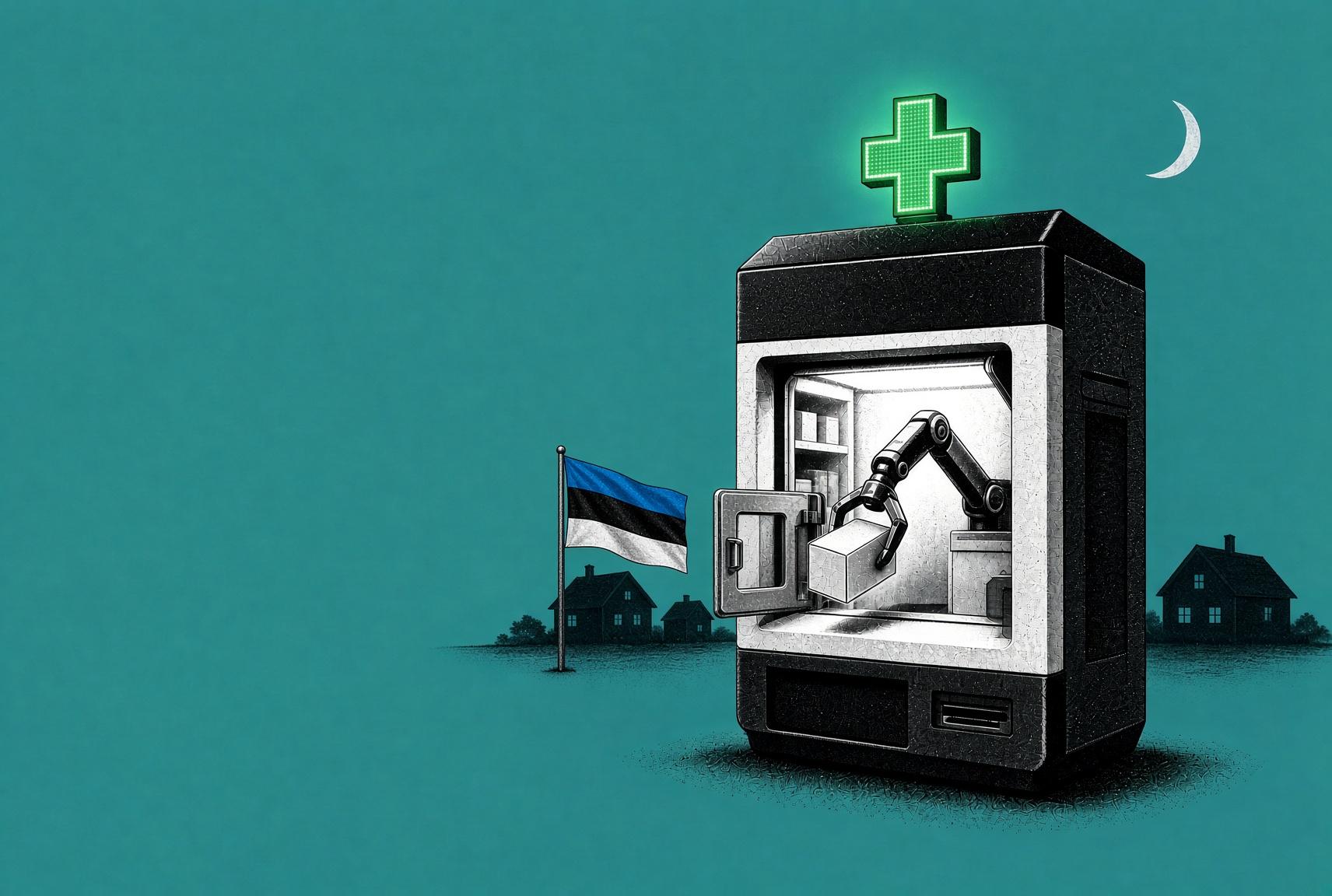
In Estonia, buying prescription medicines around the clock from a machine could become a reality if parliament approves amendments to the Medicinal Products Act, which the government approved on 5 November. The new rules, scheduled to take effect on 1 March 2027, would allow pharmacies to install automated machines dispensing prescription and over-the-counter medicines without a pharmacist physically present.
The government's aim is to improve access to medicines in rural areas and on islands, extend availability beyond normal pharmacy opening hours, and address staff shortages.
The system allows customers to select their medicine on a touchscreen, verify their identity digitally, and complete the transaction through a video call with a pharmacist, who reviews the request and authorises the sale.
The system was developed by Grab2Go, an Estonian start-up, and tested for six months in cooperation with Accelerate Estonia, a government programme that helps businesses overcome regulatory barriers preventing new products and services from entering the market. Estonia could become the first European country to allow prescription medicines to be dispensed through this type of automated system.
The proposal limits each operator to ten machines. In settlements with more than 4,000 inhabitants, each pharmacy may have one machine installed alongside its premises. In smaller settlements, a machine may operate alongside a pharmacy or at least 1 km away from a pharmacy belonging to another operator. Some pharmacists fear that the machines could undermine the financial viability of rural pharmacies and accelerate their closure.
By contrast, in Germany, Europe's largest economy, a similar machine was banned. In April 2017, DocMorris, a Dutch online pharmacy, opened a video-consultation terminal on the premises of a former pharmacy in Hüffenhardt, a village of around 2,000 inhabitants in the state of Baden-Württemberg. Customers could order medicines through the terminal and collect them from a machine after a video consultation with a pharmacist.
Regional authorities ordered the operation to close, and pharmacists in the area took the matter to court. In May 2019, the Higher Regional Court of Karlsruhe upheld the ban. In August 2020, Germany's Federal Court of Justice confirmed the ruling, rejecting DocMorris's appeal. The courts ruled that medicines could only be dispensed by a properly licensed pharmacy or through a pharmacy's legally authorised mail-order service.
The president of the regional pharmacists' association described the ruling as a victory for patient protection over the 'pursuit of profit' by online pharmacies.
Competition in Germany's pharmacy sector is also restricted. Only pharmacists may own pharmacies, and each pharmacist may operate a maximum of one main pharmacy and three branches. Pharmacy chains and ownership by non-pharmaceutical companies are prohibited.
Yet German pharmacies continue to disappear. At the end of 2025, only 16,601 remained, the lowest number in almost 50 years: 502 closed and just 62 opened. By the end of September 2026, the figure had fallen to 16,444. Germany has around 20 pharmacies per 100,000 inhabitants, compared with a European average of approximately 31.
By the same author


Share to: