The New Right is rising as Europe’s liberals retreat
As the New Right reshapes Europe’s political agenda, liberal parties are struggling to define what they stand for.
European parties that present themselves as liberal [1] or pro-freedom have lost ground in the European Parliament in recent years.
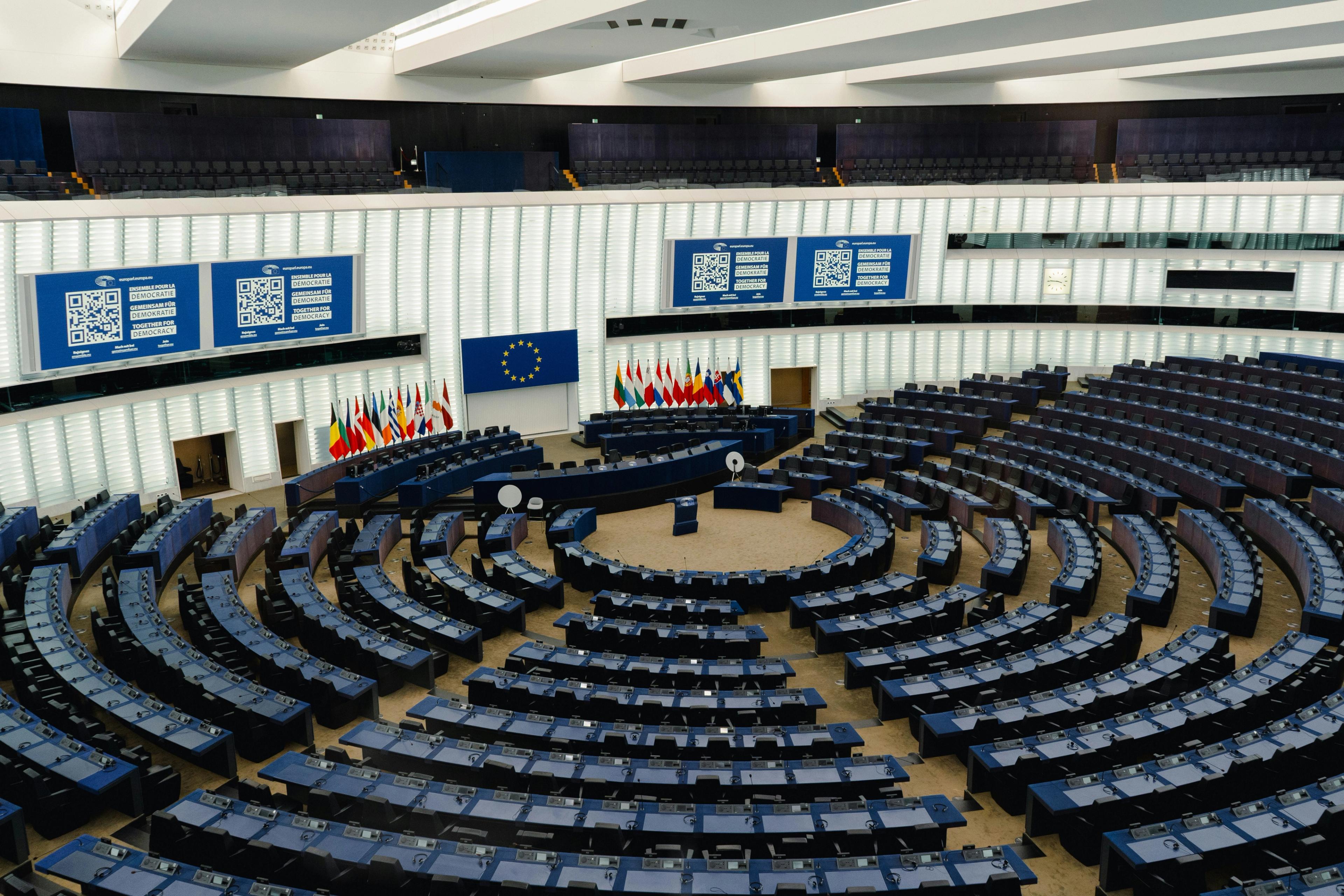
In the 2024 European elections, Renew Europe, the parliamentary group that succeeded The Alliance of Liberals and Democrats for Europe (ALDE) group after its rebranding in 2019 and presents itself as a champion of European liberal democratic values, won 77 of the 720 seats, or 10.7% of the chamber. Five years earlier, it held 108 of the 751 seats, or 14.4%. In 2014, when it was still known as ALDE, it had 67 seats, or 8.9%. The group grew until 2019, before falling back in 2024. It is still above where it started, but well below its peak.
In 2019, the group had been strengthened by Emmanuel Macron’s party, while it still included the British Liberal Democrats, who subsequently left with Brexit. Since then, Macron’s declining support in France and the collapse of Ciudadanos in Spain have accounted for a significant part of the group’s losses, as discussed below.
There has not, however, been a uniform disappearance of liberalism in European politics. In Slovakia, Progresívne Slovensko was the most successful party in the June 2024 European elections, winning 27.8% of the vote and six seats. In Austria, NEOS won 10.1% and two seats.
Liberalism has not disappeared, but it has lost influence. It is no longer a rising force. Instead, it has gone from being one of the main drivers of the parliamentary majority to being a necessary partner in putting one together.
The New Right, by contrast, is on the rise. European Conservatives and Reformists (ECR) and Europe of Freedom and Direct Democracy (EFDD) together accounted for 15.7% of the seats in 2014. By 2019, ECR and EFDD's political successor, Identity and Democracy (ID), accounted for around 18% in 2019.
By 2024, Patriots for Europe (PfE), ECR and Europe of Sovereign Nations (ESN) together held around 26% of the chamber. With 84 seats, PfE overtook Renew to become the Parliament’s third largest group.
This does not mean that liberal voters simply moved to the new right. In almost no country did liberals lose voters primarily to nationalist parties. The new right also expanded at the expense of established conservative parties, while liberal parties lost voters to a range of different political forces.
France illustrates the distinction. Macron’s list fell from 22.4% to 14.6%, while the Rassemblement National (RN) rose from 23.3% to 31.4%. But these two movements cannot be explained as a straightforward transfer of votes. Some of Macron’s former voters moved to the left, while the RN drew most of its new support from the right. In Spain, Ciudadanos collapsed, falling from 12.3% of the vote and seven seats in 2019 to no MEPs at all in 2024. The political space it had occupied in the centre right was absorbed mainly by the PP and, to a lesser extent, by Vox.
Crucially, between 2019 and 2024, Liberals also ceased to be merely an alternative to those in power and became part of the establishment themselves. In the European Parliament, Renew is part of the majority supporting Ursula von der Leyen, alongside the EPP and the Socialists and Democrats. Several national liberal parties faced a similar problem. Germany’s FDP governed alongside the SPD and Greens until 2024. In Belgium, Open VLD was part of the Vivaldi coalition. Macron himself went from being a symbol of political renewal to a president associated with the exercise of power and the consequences of his reforms.
In the most important votes of this parliamentary term, liberals are now more often aligned with the EPP and S&D than with ECR or PfE. This alliance, rather than a clearly defined liberal doctrine, increasingly defines the European liberal centre. That stands in direct contrast to the forces to the right of the EPP, which have remained more cohesive in opposition.
This has made it harder for liberals to present themselves as an alternative to the establishment. They have become associated with the agenda they helped to govern, including deeper European integration, environmental and energy regulation, and a centrist approach to immigration. Yet parts of their electorate wanted less regulation, greater social protection or tighter borders. The decline of liberalism therefore does not amount to a mass conversion to the new right. It is also the result of an electorate that has fragmented in response to an ideological crisis within liberal politics itself.
Voters’ priorities help explain that fragmentation. The European Parliament’s post electoral survey found that rising prices and the cost of living were the main issues influencing Europeans’ decision to vote, cited by 42% of voters, followed by the economic situation, at 41%. The international situation was mentioned by 34%, while the defence of democracy and the rule of law was cited by 32%. Migration and asylum, the environment, and EU defence and security were each mentioned by 28%.
It is on this terrain that the new right has gained ground. It has turned immigration, border control, the cost of living, energy and security into a clearer political offer than its opponents.
The growing weight of the groups to the right of the EPP is already translating into concrete decisions. In November 2024, the EPP, ECR, PfE and ESN backed a postponement of the EU’s anti deforestation rules. In 2025, the EPP joined forces with the right to approve the omnibus package, which eased environmental requirements and became the first major piece of legislation to pass with that coalition. In 2026, Parliament made deportations easier, including through return centres outside the EU, longer periods of detention and mutual recognition of expulsion decisions. PfE also played a leading role in work on the 2040 climate target. The right does not control the Parliament, but its growing weight is already allowing it to influence what gets through.
Among younger voters, the new right secured around 21% support among young men and 14% among young women. Many young people abstain altogether. Among those who vote for the right, men predominate, while issues such as housing, wages and immigration matter more than the European integration that has traditionally been central to Renew.
Liberals have also lost clarity on the issue that should be most distinctly their own: the defence of economic freedom and property rights. On the corporate sustainability due diligence directive, which requires companies to monitor their supply chains, Renew voted with S&D and the Greens to adopt the law on 24 April 2024. ECR and Identity and Democracy voted against. It is a pattern that has been repeated whenever the choice has been between more regulation and less, making it increasingly difficult to distinguish Brussels liberalism from moderate social democracy.
The retreat of European liberalism stems, to a large extent, from an inability to clearly define and assert its core principles and values. In recent years, the strategic positioning of these parties has led them to function predominantly as an indispensable element for enabling governing coalitions in Brussels.
By remaining stuck in constant coalitions and successive compromises, liberals have seemingly lost their ideological clarity and failed to adapt to voters' concerns or the current political moment.
- Here, “liberal” is used in the British sense, referring to classical liberalism and free-market politics. ↩