An alternative to democracy: 3 key ideas from Panarchy (1860)
Panarchy offers an alternative to democracy. It seeks to break the territorial monopoly of the state.
Almost every election plays out the same way: half the country celebrates, while the other half swallows its frustration. Democracies become mired in polarisation that exhausts everyone, and we eventually find ourselves wondering why we accept living under decisions we never approved.
What if you could change your government or jurisdiction as easily as you change your internet service provider, without leaving your home? Citizenship would no longer depend on the soil on which you were born, but on a freely agreed personal contract that you could terminate at any time.
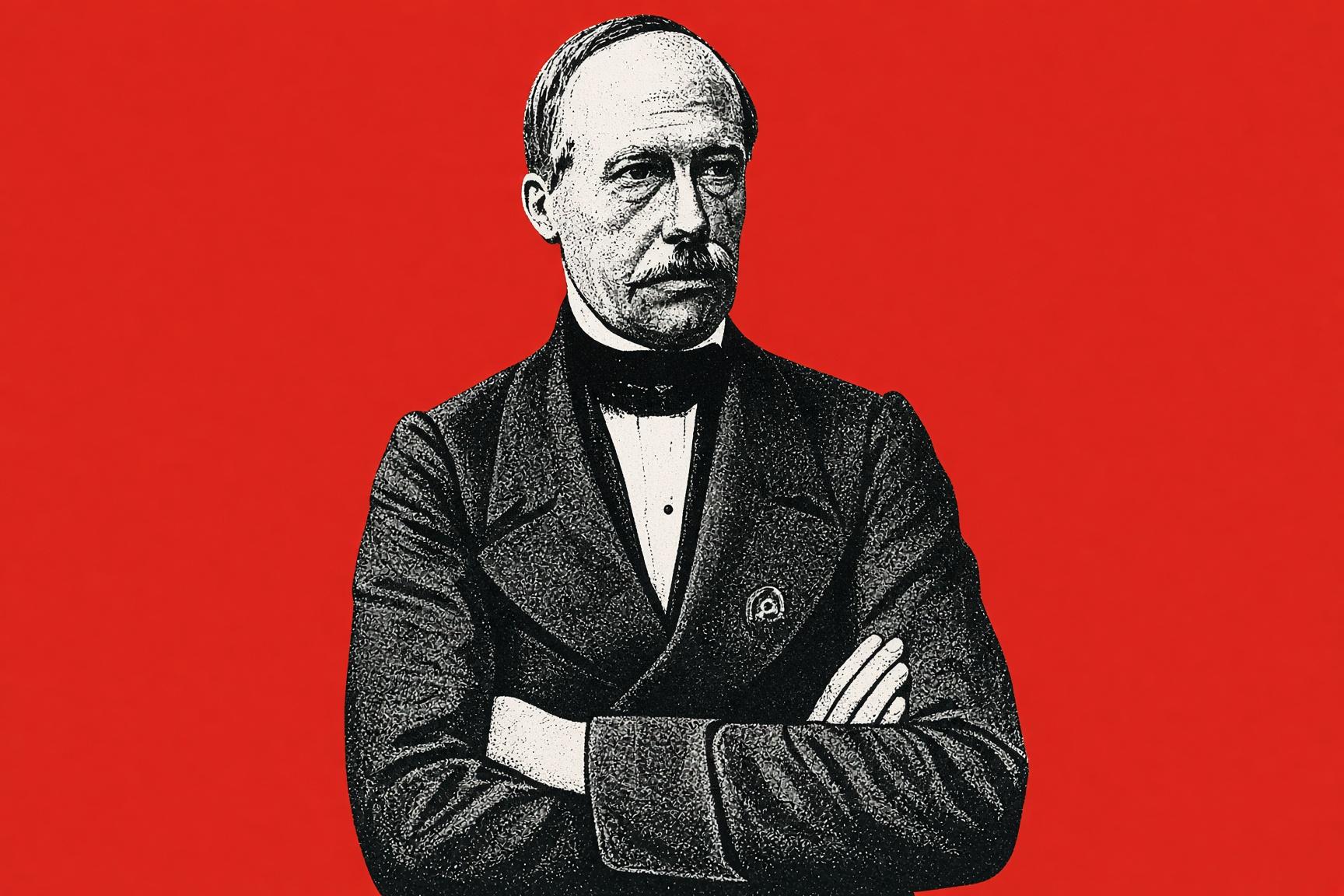
This is the idea put forward as early as 1860 by the Belgian botanist and economist Paul-Émile de Puydt. Why not apply the principle of 'laissez-faire, laissez-passer' to the provision of security and the organisation of society, without revolutions or barricades?
Origins and principles
In 1860, de Puydt published 'Panarchy' in Brussels's Revue trimestrielle. The word combines the Greek pan ('all') and arché ('power', 'government'). The idea is not to abolish all authority, but to decentralise it as much as possible and eliminate its monopoly over a given territory. Rather than inventing yet another utopia, he applies the central principle of classical liberal economics to politics: laissez-faire and free competition in a market.
The word 'political' derives from polis, the Greek city-state, where a single authority exercises power over a defined territory. Panarchy breaks with this territorialism: it allows several competing governments to coexist within the same territory, freely and individually chosen by citizens through personal contracts.
According to de Puydt, 'for all and each of the elements of human society, there must be the freedom to associate according to their affinities and […] the absolute right to choose the political society in which they wish to live and to be subject to that society alone.'
Panarchy therefore guarantees everyone the right to choose their own form of self-government, join the community that suits them (whether a monarchy or a republic), or even reject all government (whether communist anarchism or anarcho-capitalism).
Key idea 1: a model for peace through political tolerance
The most telling comparison is with religious tolerance. A few centuries ago, the idea that followers of different faiths could live in the same city without slaughtering one another seemed absurd. Religious freedom proved otherwise: competing churches can coexist.
Panarchy proposes extending this tolerance to politics. Monarchist, republican, socialist and liberal governments would coexist within the same space, each applying only to those who had chosen it. This does not, of course, rule out alliances or confederations within the same territory, whether for defence, criminal justice or other purposes.
Yet the idea of governance detached from territory is far from utopian. It draws on longstanding legal practices, three of which historically anticipated panarchy:
- In the medieval Muslim world, non-Muslims, like foreign merchants, enjoyed extraterritorial rights, and several jurisdictions coexisted on the same soil.
- The Catholic principle of subsidiarity, formulated by Leo XIII in Rerum novarum, holds that power should be exercised at the lowest possible level, as close to the individual as possible. This sits uneasily with a centralised, monopolistic state.
- Finally, the Jewish diaspora has often defended the right to live according to its own communal rules, regardless of the sometimes repressive territorial powers surrounding it.
A utopia proposes a fully formed world, designed in advance, which must be built all at once by sweeping away the past and creating a new human being. Panarchy demands nothing of the sort. It does not prescribe the best form of social organisation; it merely asks that we stop imposing the same one on everyone.
It does not seek to change human nature. On the contrary, it relies on incentives, the deep-rooted motivations that govern human action (moral values and economic interests). What looks more like a utopia is the opposite assumption: that a single system, imposed on millions of people, can suit everyone.
Key idea 2: true freedom is not the right to vote, but the right to leave
True political freedom lies in the ability to unsubscribe from a government. The right to vote within a territory offers only marginal influence, whereas the right to exit guarantees genuine autonomy by allowing people to change governments without changing their place of residence.
To understand how this would work in everyday life, we must distinguish between 'Democracy' with a capital D, meaning political voting, and 'democracy' with a lower-case d, meaning the market.
In Democracy with a capital D, majority rule creates a monopoly. Consider an election between Mr X and Mr Y. If Mr X receives 51 per cent of the vote, his supporters get their president. But the remaining 49 per cent, including those who wanted a third candidate or no government at all, must obey the winner. The minority's vote is nullified.
Ludwig von Mises clarified this distinction by showing that the market is more democratic than the ballot box. In a free market, no vote is wasted. When you buy a tin of beans from brand X, that economic 'vote' concerns only you and does not force anyone else to do the same. Suppose X wins. Political Democracy would decree that only X could be produced from then on, for everyone. The market, by contrast, continues to produce Y, Z and W for the minorities who prefer them. Everyone governs themselves and gets what they have chosen.
By applying the logic of market democracy to political structures, panarchy makes it possible to satisfy everyone's aspirations simultaneously, without imposing their choices on their neighbours. The principle of territorial majority rule creates a destructive monopoly that fuels permanent cultural warfare.
Key idea 3: a social contract inspired by the commercial franchise model
In practice, panarchy would work like an international franchise. Marriott offers a telling example: it is the world's largest hotel chain, with a network of 10,200 properties in 148 countries in 2026. This franchise is based on a 20-year contract between the Marriott investor who builds the hotel and the franchisee who operates it under the Marriott brand, following a standard protocol. In return, the franchisee pays 6 per cent of room revenue and 3 per cent of food and beverage revenue.
Under panarchy, membership would be based on a renewable one-year contract, with an annual membership fee or subscription instead of compulsory taxes.
A citizen's status in their host country would resemble that of a diplomat: exemption from local, property and income taxes, while public services (water, waste management and security) would be purchased directly from local providers or negotiated through the franchise. Finally, the government would operate without formal voting rights, but with complete freedom to subscribe, lodge complaints or terminate the agreement.
Today, the Westphalian nation-state, with its rigid borders and monopoly on the use of force, seems to have been overtaken by technology. The nineteenth-century state relied on the telegraph and the railway to unify a territory. In the digital age, the world is becoming a village, and the link between physical territory and social organisation is no longer as relevant.
Estonia offers an early example through its e-Residency programme: anyone in the world can become a virtual resident, set up a company and sign contracts through secure electronic means. Cryptocurrencies, decentralised smart contracts and the online communities discussed by Balaji Srinivasan make it possible to imagine virtual nations capable of providing security, insurance and governance on a global scale, without anyone having to move.
The challenges of implementation
Panarchy already exists in fragments. The real challenges remain: physical security and the resolution of conflicts between overlapping governments. Paul-Émile de Puydt recognised these issues, since he envisaged fixed-term commitments, contractually agreed fees and associations between independent jurisdictions for their own defence. The virtual nations described by Balaji Srinivasan will also have to address them. But these are questions of implementation, to be resolved through trial and error, not objections of principle.
- Paul-Émile de Puydt, ‘Panarchy’, Revue trimestrielle, Brussels, July 1860, pp. 222–245. The English and German translations, as well as the original French text, are available at panarchy.org. ↩
- The expression ‘laissez-faire, laissez-passer’ comes from Vincent de Gournay, who advocated, among other things, the free movement of grain between French provinces to combat famine. It later became the central motto of the Physiocrats in the eighteenth century. They believed that the state should not interfere with the ‘natural laws’ of the economy. ↩
- The author of ‘Panarchy’ was the first to use the term. However, the idea had already appeared in the work of his mentor, the economist Gustave de Molinari, particularly in his 1849 book Les Soirées de la Rue Saint-Lazare (Eleventh Evening), and in his article ‘De la production de la sécurité’, published in the Journal des Économistes on February 15th 1849 (vol. 22, no. 95, pp. 277–290). Molinari defended what he called ‘freedom of government’ ↩
- See John Locke, A Letter Concerning Toleration (1689). ↩
- Leo XIII, Rerum novarum (1891), followed by Pius XI, Quadragesimo anno (1931), §§ 79–80, in which the principle of subsidiarity was definitively formalised. ↩
- Ludwig von Mises, Human Action (1949), Chapter XV, ‘The Market’, in which he develops the idea of consumer sovereignty. ↩
- The Sovereign Individual (French title, 2026: L’Individu souverain : survivre et prospérer face à l’effondrement de l’État-providence) is a 1997 book by James Dale Davidson and Lord William Rees-Mogg. ↩
- Estonia’s e-Residency programme, launched in 2014 (official website: e-resident.gov.ee). ↩
- Balaji Srinivasan, The Network State (2022). ↩
By the same author


Share to: